
An evidence-based analysis of the major B2B SaaS revenue growth levers available to revenue leaders.
TL;DR
The average CRO tenure is 18 months. With limited time to grow revenue, CROs often struggle where to focus first. We break down every major revenue growth lever available to a CRO, from compensation and territory design to pricing and retention and identify what the scholarly data says about the impact of each. None of the classic revenue growth levers clearly demonstrate more than a 10% lift. One emerging growth lever, thanks to AI, shows a 15% potential gain: product-to-revenue execution, or product monetization which is the discipline of turning shipped product capability into revenue across active deals, expansion, retention, and re-engagement.
Ranking B2B SaaS revenue growth levers
You inherit a B2B SaaS revenue organization that needs to grow revenue 10% or 100%. Where do you start?
As a sales leader, it's impossible to find a source of truth of what impact to expect from growth levers and what those options are. You can hire more sellers. Redesign territories. Change compensation. Introduce MEDDPICC (or another methodology). Coach reps. Tighten the ICP. Improve account prioritization. Multithread more aggressively. Change pricing. Invest in customer success. Add sales technology. Generate more top of the funnel pipeline.
Companies spend enormous sums pulling these levers, but we haven't found a definitive paper aggregating them, so we've made it. We reviewed academic studies, randomized field experiments, large B2B opportunity datasets, and documented implementation programs, and tried to answer three questions for each lever:
- How large is the potential revenue effect?
- How difficult is it to implement both in terms of effort and professional capital?
- How strong is the evidence?
The 4 (only) ways to increase revenue
Revenue increases because you do one of four things:
- Create more opportunities: More qualified pipeline, better channels, more sales capacity.
- Convert more of the opportunities you already have. ICP, qualification, coaching, multithreading, territory allocation, sales technology.
- Capture more dollars from each win. Pricing, packaging, discount discipline, ACV expansion.
- Increase revenue after the initial sale. Retention, upsell, cross-sell, adoption.
Every tactic on the menu in Exhibit 1 lands in one of those four buckets. Territory design is a conversion play. Pricing is a dollars-per-win play. Customer success is bucket D.
Exhibit 1: The CRO revenue improvement menu
8 conventional revenue levers, ranked by real annual dollar impact.
*Pricing measures return on sales, not revenue growth — not directly comparable to the % rows above and below it.
†Coaching's +1.5% applies mainly to orgs hiring reps continuously.
‡Account prioritization and retention are measured against renewal bookings & a top-vs-bottom quartile spread, respectively.
§Multithreading and qualification methodology show strong win-rate associations, but causal uplift is unmeasured.
Sources: LinkedIn Account Prioritizer A/B test; Zoltners and Sinha; Friebel, Heinz, Krueger and Zubanov (AER); McKinsey; Gong Labs; Ebsta/Pavilion B2B Sales Benchmarks — full source list at end of paper.
The classics work, but only just
First, most of the traditional interventions with clean causal evidence produce meaningful but limited gains. That makes intuitive sense. Even a mediocre CRO knows these and has probably implemented them. Fixing their implementation, or reimplementing them, will only help a bit. Simply put, a lot of low hanging fruit gets picked first.
Compensation is measured at roughly a 3% sales lift. Better account prioritization has produced an 8.1% lift in renewal bookings. Territory redesign has delivered 2–7% sales gains. Coaching can have a much larger effect on ramping reps, but only on the portion of revenue those reps produce. Pricing and retention can create larger economic gains, but as anyone who has introduced new pricing knows, the professional capital required is immense. Across the conventional menu, we found no single intervention with strong evidence of a clean, company-wide 10% revenue lift.
Second, the biggest number in the table, product-to-revenue execution, sits outside the pre-AI conventional menu, with a smaller effort score than the rows around it.
Exhibit 2: Impact versus effort
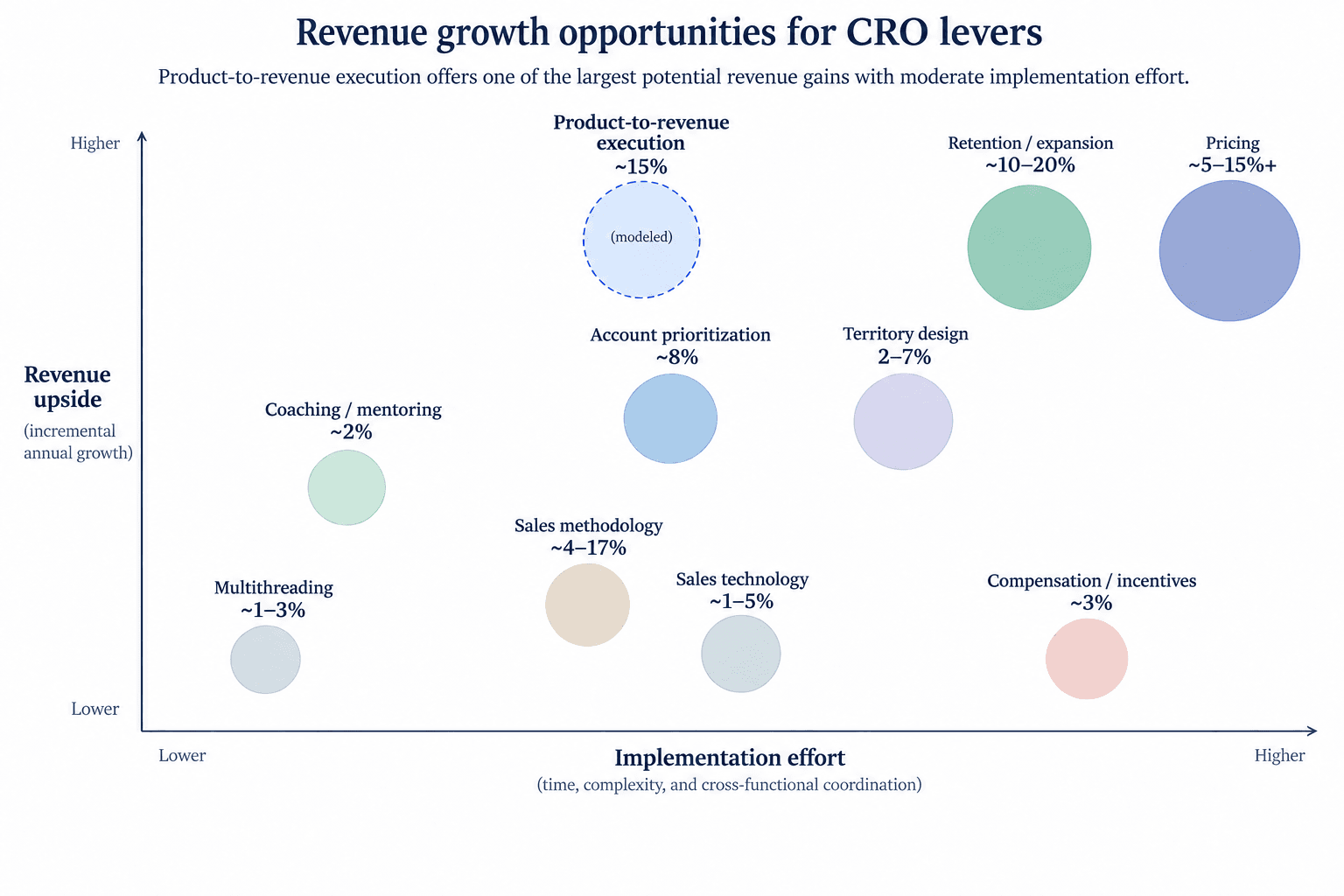
If you as a CRO have 18 months to make an impact and limited professional capital to make it, you don't just need to know what will have the highest impact, but what is the highest/lowest effort. It is this analysis that caused us to build software in this category, instead of us building software in this category and then finding an explanation. The rest of this paper does two things: makes sure you're know what the classics can do for your bottom line, then makes the case for the outlier, what it is, why it's real, and how to run it.
What is Product-to-Revenue Execution aka Product Monetization?
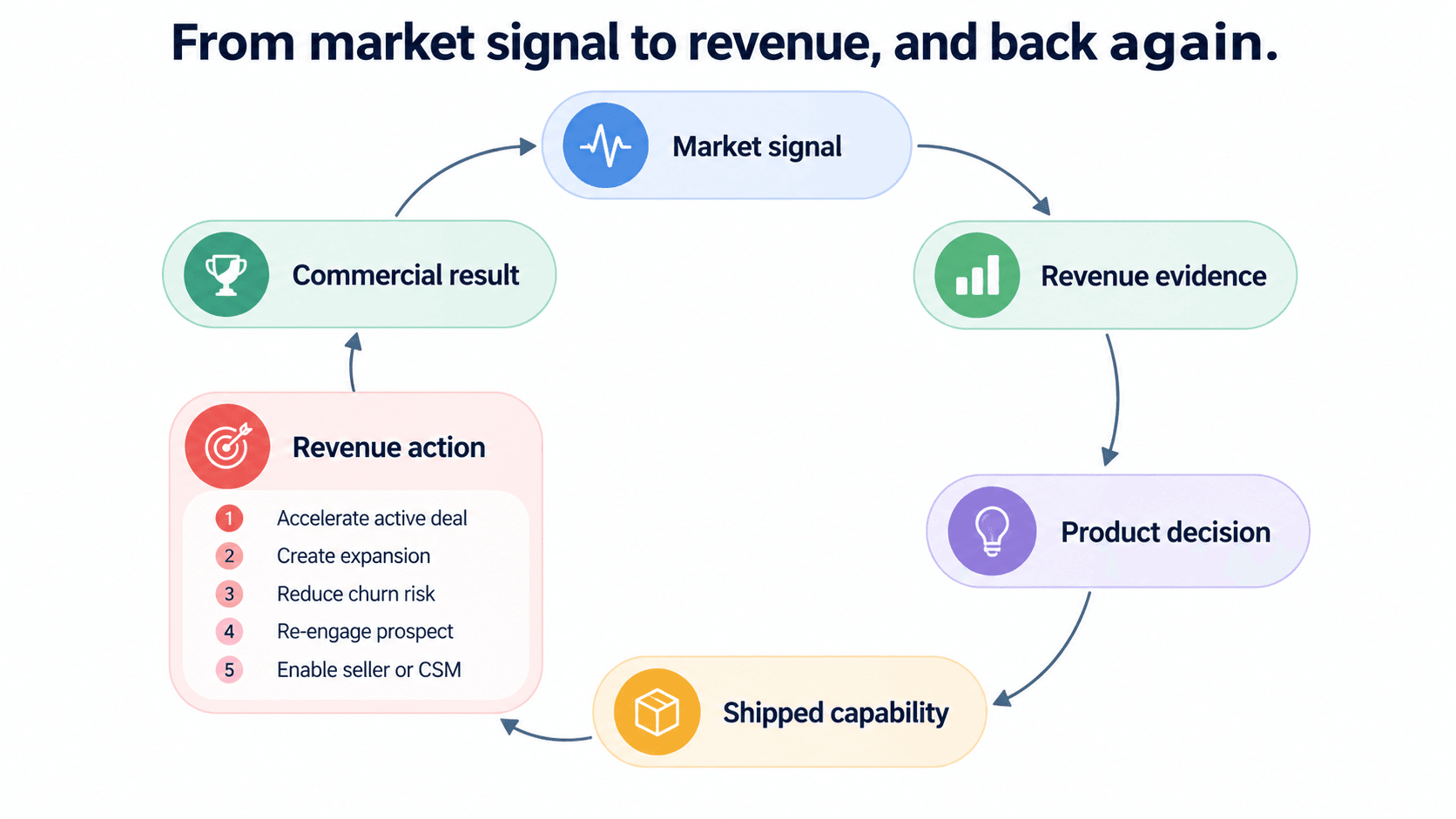
Product-to-revenue execution or product monetization is the discipline of turning shipped product capability into revenue across active deals, expansion, retention, and re-engagement. It breaks into five parts: identifying which product gaps are tied to revenue, building the case to build them, launching them to Account teams, marketing them directly to prospects and customers, and measuring the commercial impact. It is a technology and an operating discipline that has the highest potential to increase revenue impact for CROs.
The 5 parts of product-to-revenue execution aka product monetization
- Identify what products need to be built to close revenue: this requires identifying the urgency of product gaps, tracking them across deals and upsells, and normalizing them into problems to solve and solutions. Most sales teams have extensive experience doing this anecdotally.
- Getting them built: Now that you've identified them, communicate them internally with the case to be made. This is a new skill for revenue teams, that AI makes much more approachable.
- Launching them to Account teams: Once built, Revenue teams need to make sure the right sales reps and Account teams know which deals and upsells are unblocked. The key is scarcity. Mass messaging, release notes, and meetings get tuned out.
- Marketing to prospect and customers: Sales teams and Account teams are overwhelmed, so it's recommended to communicate the launches directly to prospects and customers. Historically, only large products got communicated, but with AI, personalizing who gets what's communication is much easier and recommended. A simple email to a prospect announcing the feature that mattered goes much further than a large newsletter. Don't let perfect get in the way of good.
- Measure impact: Sales has the gift and the curse of being very measurable. This is no different. CROs should measure what features are improving deal velocity and close rates and communicate this as a feedback loop and to Account teams to improve talk tracks.
Put together, when engineering ships something a buyer asked for, that capability can increase conversion on active deals (B), revive previously lost opportunities (A, in effect), create upsell (C and D) and reduce churn (D). It crosses the funnel. Since this so directly impacts revenue, this should be controlled by the Revenue team.
Product-to-revenue execution's outsized impact
In Exhibit 1, product-to-revenue execution (aka product monetization) has the highest potential impact on bottom line revenue based on the data. That is for several reasons. First, it impacts net new sales, retention, upsells, and cross-sells. Second, it relatively unimplemented, so there is a lot of low hanging fruit. Third, prior to AI, it wasn't a problem and was difficult to implement when it was.
Calculating the impact
The individual pieces are measurable and we wanted to show our work so you can plug in your own data to validate. You can see full calculations for net new revenue, deal re-engagement, and existing customer revenue in the footnotes. Feel free to make them your own.
Model assumptions: top reps generate 80% of new-business revenue (Ebsta), win 35% of deals, 25% of their losses are caused by missing functionality, net-new represents 70% of annual growth, expansion represents 30%, and 30% of expansion is product-triggered.
The rest of this paper moves quickly through the conventional levers, where the evidence is comparatively mature, and then spends more time on product-to-revenue execution: a potentially larger, cross-funnel revenue lever that represents the biggest impact per effort for a CRO trying to grow revenue.
Exhibit 3: Professional capital required for each growth lever
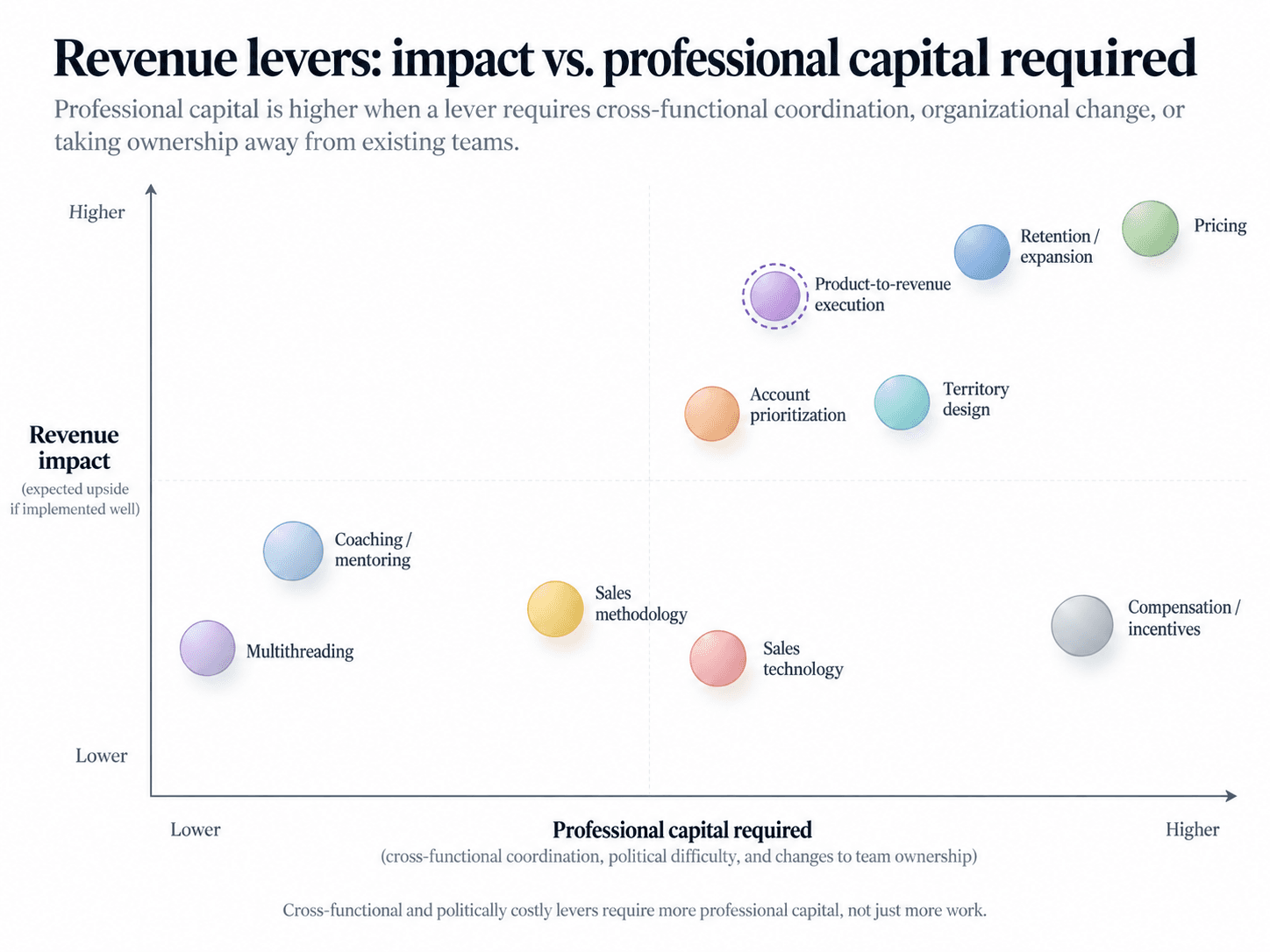
Before we dive into the growth levers, a word on professional capital. As a new CRO, you have limited professional capital to call upon. The more cross-functional a solution or the more inertia it fights, the more capital it requires. In plain speak, it's harder to get things done when not everyone loves you. The professional capital required for each growth lever is something that must be accounted for for this to be useful.
The 8 levers for revenue growth
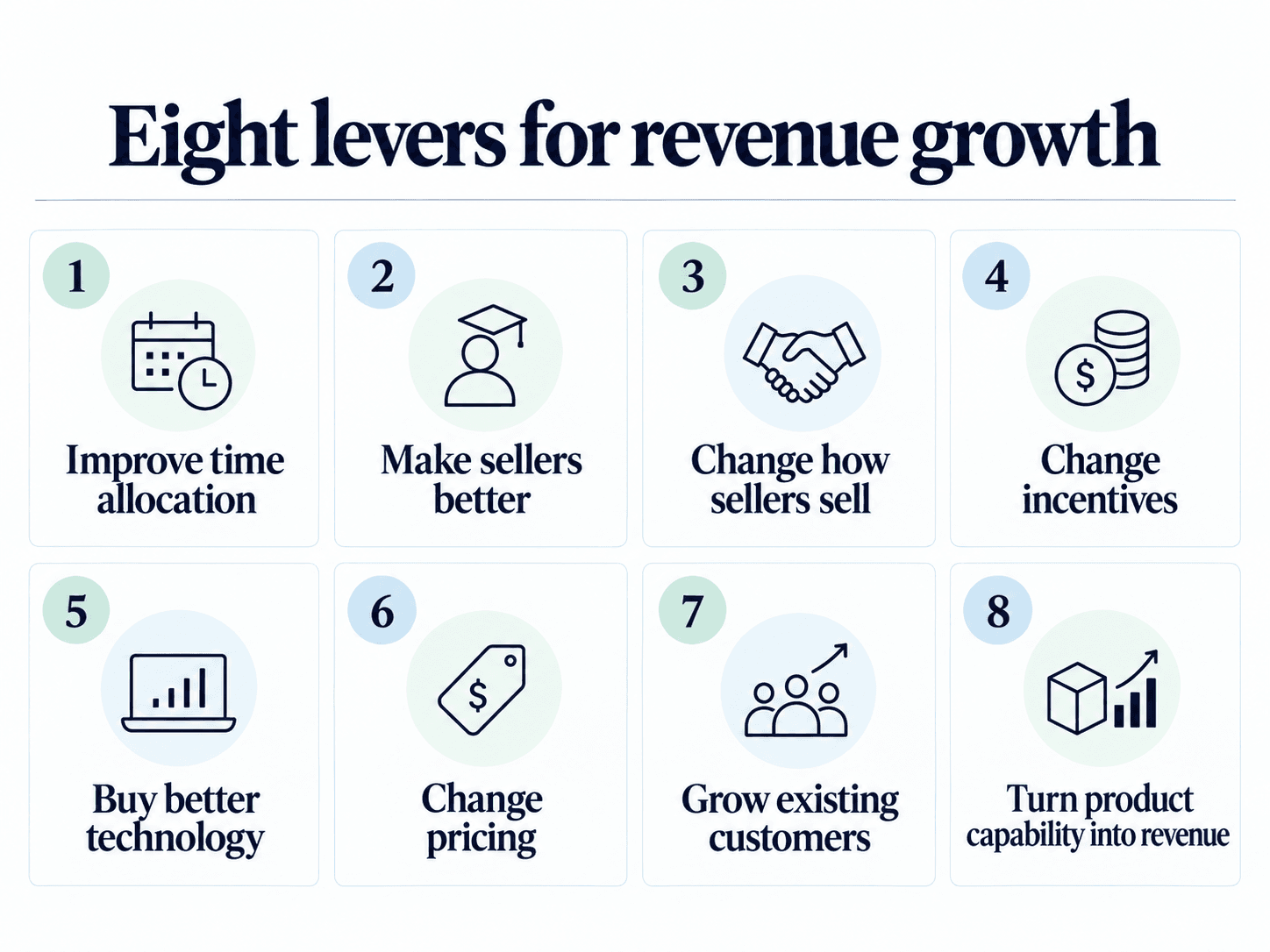
Lever 1: Improve sales organization time allocation
This lever bundles ICP definition, account prioritization, territory design, coverage models and sales-force deployment. They're different projects operationally, but economically they're the same idea: point the best sellers you already have at the opportunities most likely to pay.
Does better allocation actually produce more bookings?
Territory design has a long track record. Zoltners and Sinha, who have spent decades doing this work for pharmaceutical and B2B sales forces, report on roughly 1,500 territory alignments across 500 companies. Their estimate is that moving from an average alignment to a good one is worth 2 to 7% in sales. For upsells, LinkedIn ran an experiment with their Account Prioritizer, a machine-learned ranking of accounts to work vs. a control group. The treatment group produced an 8.08% increase in renewal bookings. Sales-force sizing sits next to this. In one documented implementation, resizing and redeploying the sales force produced an 8% sales gain.
All of this makes intuitive sense. Top reps close a substantial amount of revenue, so giving them as many deals to close as possible, should grow revenue.
The effort cost is high however both emotionally and professionally. Territory redesign touches comp plans, account ownership, and the egos of the people whose books shrink. For CROs worried about their professional capital, it's a fast way to lose it if done without understanding the political atmosphere.
Lever 2: Make sellers better
Training, coaching, mentoring, onboarding, product knowledge. Every revenue org spends money here and it stands to reason why. If you train/coach your sales people, they will get better.
The best study we found is a randomized field experiment on peer mentoring among newly hired sales agents. New hires were randomly assigned to receive structured mentoring from a high-performing peer for about thirty minutes a week for four weeks. Mentored new hires generated 18.6% more sales revenue with only two hours of a top performer's time per new hire.
However, there is a but. The 18.6% applies to ramping reps, not the whole floor. If new hires are 15% of your sales headcount and produce, say, 8% of revenue during ramp, an 18.6% lift on that slice is worth roughly 1.5% of total revenue. Still an excellent return on two hours of mentoring per rep. Not a company-wide 18.6%.
The effect also decays. About 45% of the initial lift remained at six months. Knowledge transfer works, and then it fades unless something keeps refreshing it. That's a point we'll come back to, because it applies to product knowledge as much as it applies to selling technique.
If you're constantly hiring reps, structured mentoring has one of the best effort-to-evidence ratios in the literature. If you're not, the lever is smaller than it looks.
Lever 3: Change how sellers sell
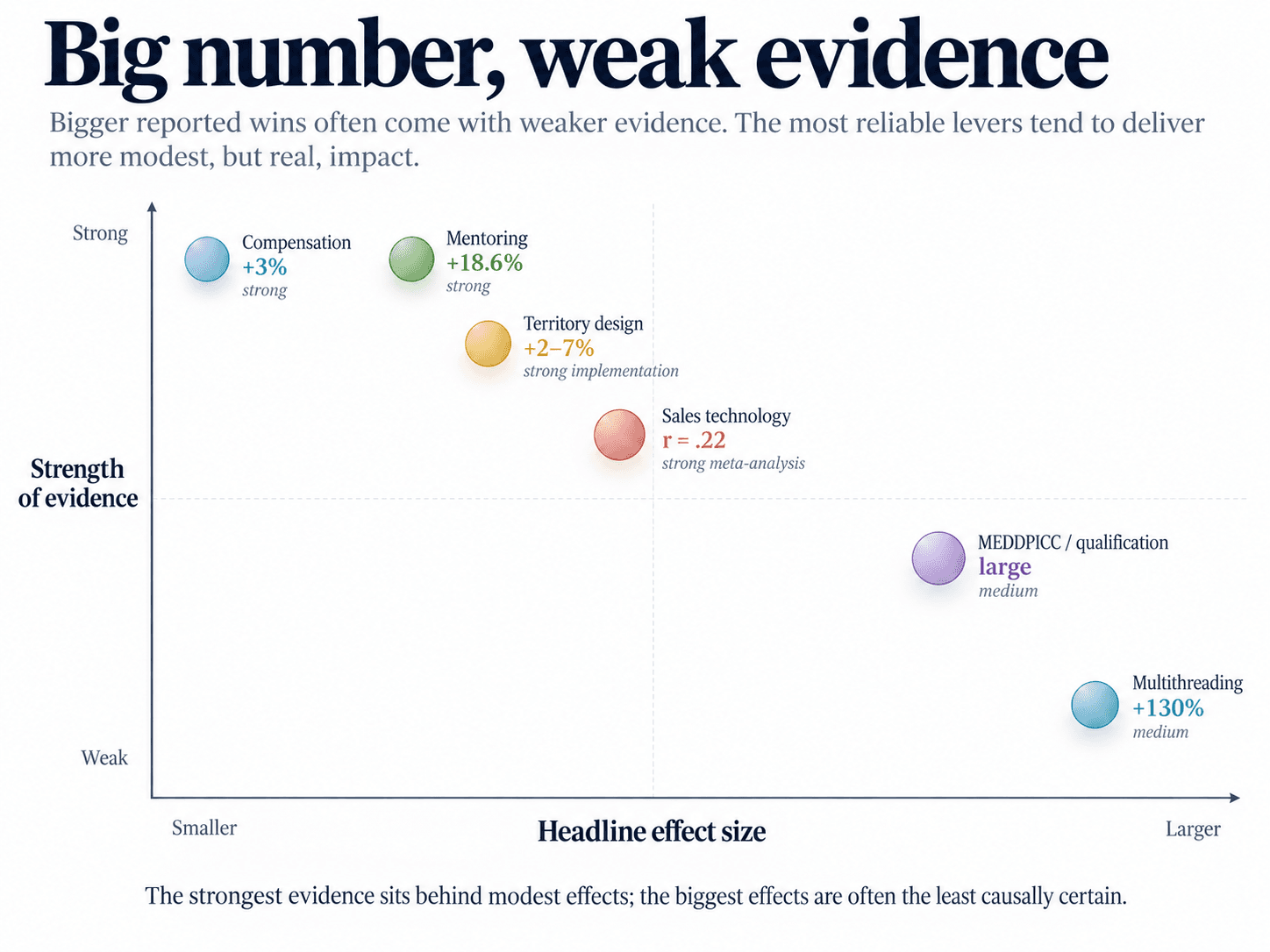
Methodology, qualification frameworks, multithreading, team selling. This is where big claims are made, but with weaker causal evidence than we'd like.
Gong's analysis of roughly 1.8 million opportunities finds that multithreaded deals, where the seller engages multiple stakeholders on the buying side, are associated with a 130% higher win rate on deals over $50K. Ebsta's benchmark across 4.2 million opportunities finds large associations between qualification discipline (MEDDPICC-style criteria being filled in, and filled in early) and successful outcomes.
But causality is not correlation. Reps who multithread win more, but deals that are won are more likely to go through multiple people. Reps who qualify rigorously have higher win rates, but also may not produce as much absolute revenue because they may not sell to deals that they could win.
Mandate multithreading and rigorous qualification because they're cheap and the correlation is strong and consistent. Just don't expect 130% revenue growth.
Exhibit 4: Big number, weak evidence
If you find better studies, please reach out to us, we want this to be a definitive source for CROs.
Lever 4: Change sales incentives
Say it with me, if you tell me the incentives, I'll tell you the outcome. But, what does the data say? The best study is a randomized experiment published in the American Economic Review by Friebel, Heinz, Krueger and Zubanov. A retail chain randomized a team bonus across 193 locations and roughly 1,300 employees. Sales rose about 3%. Every dollar paid in bonus generated $3.80 in sales and $2.10 in profit. It's a retail chain, not a SaaS company, but it's a very well designed study.
Three percent sounds boring next to a vendor promising 40%. It isn't. A rigorously measured 3% is a very large result. The effort is medium to high because comp changes are political, and a bad rollout costs more in attrition than the bonus costs in cash. Ask anyone who's ever lost a top rep because of comp changes.
Lever 5: Buy better sales technology
A 2026 meta-analysis pooled 62 studies, 23,192 observations and 75 effect sizes on the relationship between sales technology and sales performance. Sales technology does moderately improve B2B sales performance with social selling tools having the largest impact.
CRM, salesforce automation, social selling and newer AI-assisted tools all contribute, with effects that vary by sales setting and sector. It's also small-to-medium by any conventional standard, and it's the average across every tool category studied, so plenty of individual tools sit below it. Technology is a multiplier on an organization that already knows how to sell.
Lever 6: Change pricing
Economically, pricing can swamp most sales process improvements, because a price change acts on every unit sold while a coaching program acts on the reps who received it, for as long as the effect lasts.
McKinsey's pricing practice maintains a database of more than 1,000 pricing initiatives, with reported improvements in return on sales of 2 to 7%. One documented implementation reset roughly 100,000 prices across 150 SKUs and produced 3 to 5 points of additional return on sales in three months, without significant volume deterioration. The fear with pricing is that volume falls and cancels the gain. In the documented programs it mostly didn't, because the changes targeted transactions where the company was already leaving money on the table rather than applying a blanket increase.
The effort is high for organizational reasons, not analytical ones. Pricing lives between Finance, Product and Sales, and every rep with a discount habit will fight for it. Resetting how a company prices is a two-quarter program that requires extensive executive sponsorship. It's partly why SaaS companies have struggled in the AI era. Since their cost is incurred by usage, they should be charging per usage, but cannot organizationally move fast enough to implement it. It's caused lower margins, churn from outlandish fixed prices, and customer confusion.
Exhibit 5: The AI Pricing Mismatch
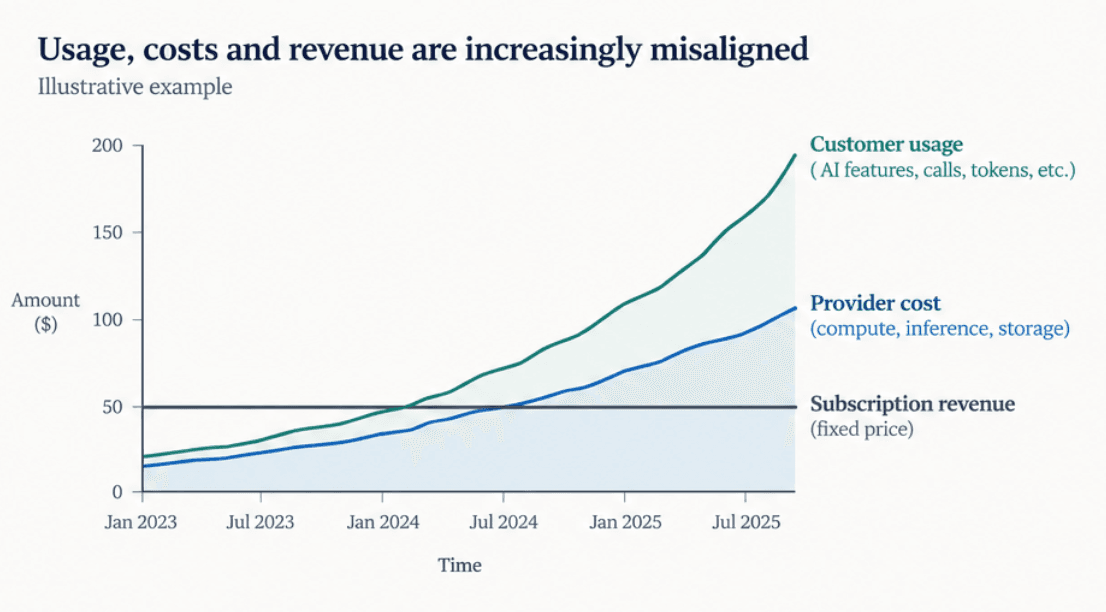
This graph illustrates the main point, but misses a subtly that has confounded many. There are usually a few customers, superusers, who make up a vast majority of the costs instead of all customers increasing their usage the same amount.
Lever 7: Grow from the customers you already have
In an established subscription business, retention and expansion is one of the largest single lever and the one with the widest observed spread between good and bad. Mainly because it's quite hard. It's cross-functional so requires high professional capital, continuous effort, and requires incentives to be aligned across teams.
McKinsey's analysis of 55 B2B SaaS companies puts bottom-quartile net revenue retention at 98% and top-quartile at 113%. At $100M ARR, the bottom-quartile company shrinks to $98M before selling anything new. The top-quartile company grows to $113M.
The execution part is the part a CRO can touch, and on that part, work published in the International Journal of Research in Marketing finds that dedicated, proactive customer success management measurably increases retention. The Alexander Group (no affiliation) has a great series of videos on this for interested CROs.
Lever 8: Turn product capability into revenue
The first seven levers all improve how the revenue organization operates: where sellers spend their time, how good they are, how they sell, how they're paid, what tools they carry, what the company charges. Pull all of them and you still eventually run into the product itself.
Ebsta and Pavilion looked at 4.2 million B2B opportunities. Among top-performing sellers, the single biggest reason for losing was missing features or functionality, which accounted for 25% of their losses. It was double number two. You have two choices: ignore it because it's not traditional to focus on this or fix it and reap the benefits. You are here because you choose number two.
This study matters because it has a large sample size, only focuses on top reps (not those who frequently come up with excuses), and is done by a company that does not sell anything that solves this problem. The results make sense. Even if you've done all seven levers perfectly, at the end of the day, it's hard to sell a bad product.
Good news: Here is where the game has fundamentally changed. It used to be impossible to get space on the roadmap. With AI, it has never been easier to build missing functionality. Now, it's making sure you execute on this for the biggest revenue impact of any lever.
How product-to-revenue execution aka product monetization works
Product-to-revenue execution or product monetization is the discipline of turning shipped product capability into revenue across active deals, expansion, retention, and re-engagement. A single feature can unblock a live deal, give a rep a reason to revive a stalled one, open an upsell, remove a churn risk, or make a prospect who said no in March worth calling in September. You can see it's operationally difficult to execute, but that's where AI is here to rescue you.
What bad execution looks like
The old way of doing it is that a feature ships, the biggest ones get a huge product marketing push, the others go to Release Notes, and then there is a bi-weekly meeting with sales announcing these features that have the reps skip because they are doing demos. A salesperson may only find out about it when they get in trouble for overselling functionality. CX person finds out about it if they remembered to tag it in Intercom. Otherwise there is a lot of 1 off Slack messages to the overworked Product Manager and Product Marketer "do we have x?" Meanwhile, each day deals are still getting lost, delayed, and churned. This didn't used to matter because there wasn't a lot of output, it was taking what product gave you and making the most of it. Now you can control it.
The evidence for the sizable product-to-revenue impact
Here are three findings, none of them are ours. We don't know the people who did the study (although we have tried to thank them).
Among top reps, 25% of losses trace to missing functionality. Another 12% are lost to a competitor. If you want to combine them, that's 37% tied to product gaps. If you don't, it's still the top reason that top reps lose deals. In this study, top reps make up 18% of reps and end up driving 80% of revenue. It makes sense why this would be the biggest thing to tackle if you want to grow revenue the most.
Pendo's feature-adoption data found that 6% of measured features drive 80% of feature clicks. It doesn't explain why the other 94% see so little use, and there are plenty of innocent reasons. It should still make a CRO wonder how much capability gets built and never really enters the commercial motion.
We believe the Product Marketing thinking that most features should be changelogs, especially with more features being built than ever, is wrong. They once asked famous baseball player, Ted Williams, later in his career, how he got the energy to try so hard every game. He replied (paraphrasing of course), "somewhere in the stands is someone seeing me for the first time and this is the most important game I'll ever play for them". To you or your product team, an individual feature may be 1 of 100, but to a prospect or a customer, it is probably the most important feature every built. This is the key thinking behind how to tackle this gap.
Peer-reviewed research on new-product selling finds that whether the sales force adopts a new product affects how well that product sells, and that marketing it internally to sellers improves the result.
Put together, the chain is not complicated. Product gaps cost revenue, product teams eventually close some of those gaps, and revenue improves when sellers actually pick up what changed. The weak link is the handoff.
4 major reasons this hasn't been raised before
If product-revenue execution aka product monetization is a breakthrough in the way we think about revenue generation, why are we only now discovering it? There are four major reasons.
- The rise of voice recorded calls: prior to the growth in recorded calls, the evidence from sales teams, account teams, and product teams didn't exist and wasn't easily digestible if it did.
- Silos: The Revenue function (like any function) has been siloed and tended to focus things historically in their team.
- "Helplessness": This data has been out there (the Ebsta study is almost 3 years old), but there seemed to be a lack of actionable insights and framework that came from the data.
- Urgency: while the data existed, engineering was the constraint and there was nothing that could be done about it, short of hiring a lot more expensive engineers.
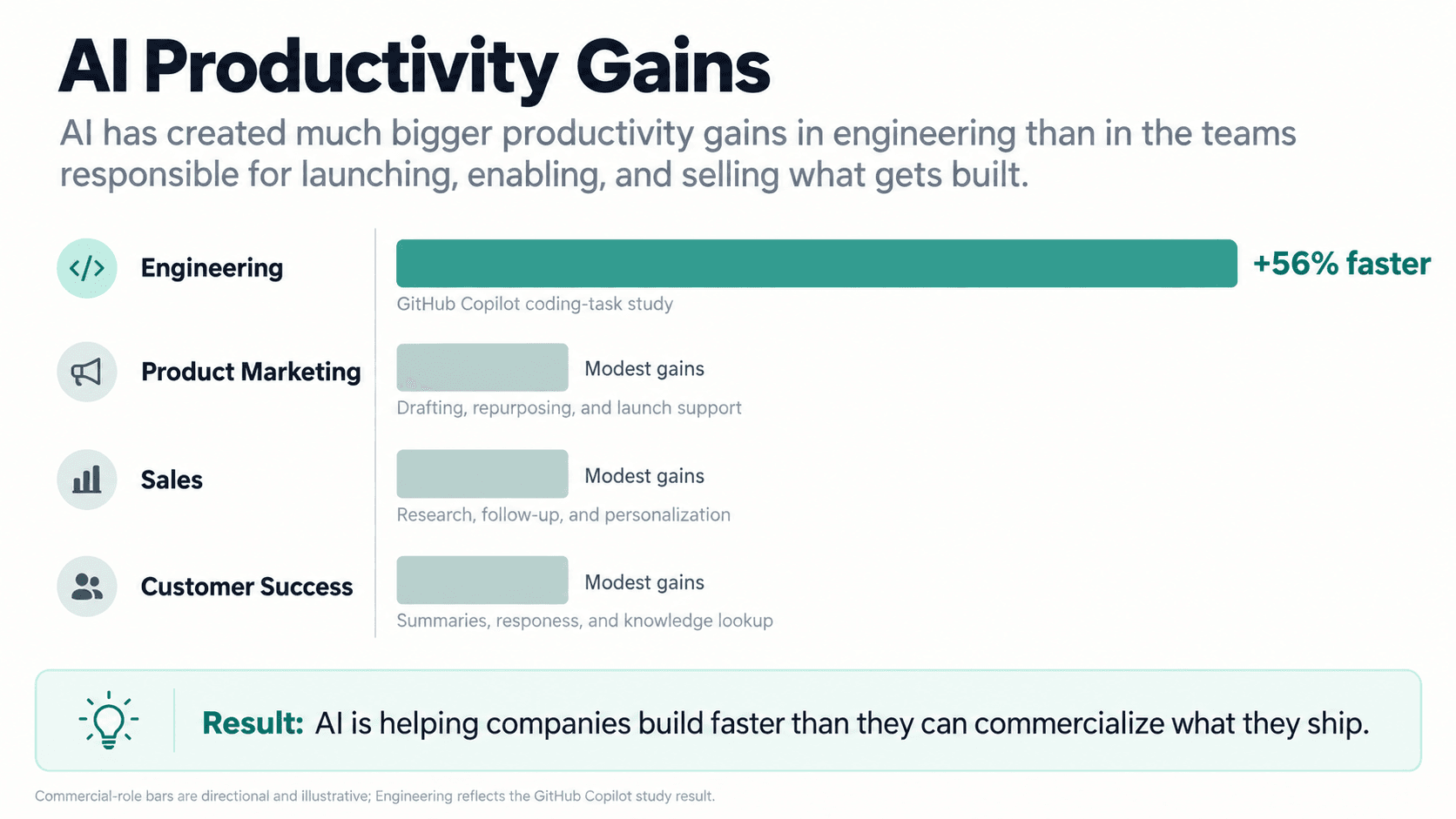
Now, these constraints are lifted thanks to AI. That's why CROs should embrace it. Everyone records calls, engineering output has 2-10x, and AI has given product and development skills to Revenue teams.
Why is this so crucial today in 2026?
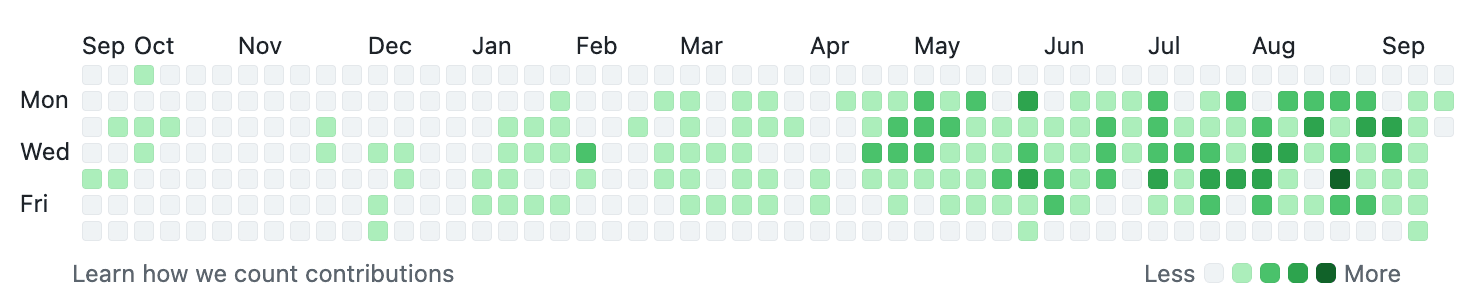
While this problem predates AI, AI has blown open the size of the problem.
For most of SaaS history, software was slow and expensive to build, engineering was usually the constraint, and the product changed at a pace a revenue team could track. That's shifting with some GTM teams even asking for engineering to slow down (truly). More meaningful releases means more opportunities to win deals, but also requires Revenue teams to work continuously to stay on top of what's happening.
A sales rep can only fit so many features in a talk track and so many features in their head. Unlike other functions, they cannot have AI do the call for them, so they have to do it themselves.
How to nail product-to-revenue execution aka product monetization
Hope is not a strategy, nor is it helpful for me to say "Sales and Product should communicate better". Here are the five jobs to be done, that if you follow, will grow revenue more than any other lever.
1. Find the product gaps that are attached to money
Don't stop at "customers keep asking for this." Revenue should be able to say how much open pipeline is blocked by the gap, which customers would expand if it existed, whether it shows up in churn risk, and which segments keep raising it. Below is example of doing it at an aggregated level and an individual feature level.
This is about calculating the specific win probability impact from the feature. With AI and improvement from AI solutions, this becomes achievable without making it your full time job (or even 5% of your job although it arguably should be).
2. Make the case to the Product team
Revenue does not usually own the roadmap, it needs to "influence" product. I talked with a CRO who has three meetings a week just to do this. He said they are the most important meetings he has every week. To make the case to product here are rules to live by (broken out so you don't miss them):
- No anecdotes
- Bring data
- Bring problems to solve (not just solutions). Product people love solving problems, like most of us, they don't like being ordered to build a solution.
3. When something ships, work backward
If a sales rep didn't reply to a demo request, a CRO would lose their mind. This is the same thing. Someone said they wanted something, you did it, but they don't know you did it. Overall, this is where most companies fall apart. They've got some good voice of the customer software and can argue their case for a roadmap, but like all of sales, it's the follow through that matters.
When a feature goes live, the job is to find everyone who it REALLY matters to: existing customers, active prospects, and lost prospects. Many companies are good at reaching out to an existing customer who filed a support ticket, but behind that, only 2% of companies reach out to prospects. It's a massive gap because the old orthodoxy was that customers should drive roadmap, not prospects, so it was never tracked. Their mistake is your revenue!
4. Get the right person to act
The right people then need to be told and it's a bit more complex than it would first appear. Should it be the Account team and the net new sales rep or should it be communicated directly to the prospect or customer? Implied is that multiple messages lessen the value of each and risk becoming tuned out.
Different rules are required depending on the following factors:
- How big is the deal size
- How recently active is the deal
- What is the meeting cadence with that prospect or customer
- What is the workload of the Account and Sales teams
- Is the product self-serve?
Recommendation: We are in favor of going direct for any prospect that's been truly inactive for 30 days and direct to customers who don't have a regular meeting cadence. That's because all teams are being asked to handle so much that they cannot handle this part.
5. Measure what happened
Track the commercial consequence: deals accelerated, pipeline unblocked, lost opportunities reopened, upsells created, expansion won, churn risks resolved, meetings booked. Tie them to the individual communications and then back to your identification of what features are deal breakers. You don't want to leave this up to another team because they have different metrics than you.
Where Should a New CRO Start?
It's your first day as CRO, what do should be your goal for the next 30/60/90 days? If retention is really bad, fix retention. If territories are truly a mess, fix the territories. If you're hiring constantly, the mentoring evidence is hard to argue with. If you are taking over a truly inept system, these come first because the data all but guarantees positive returns.
However, this is rarely the case. The previous CRO wasn't an idiot, as much as we tell ourselves, and others that. The data suggests the biggest bang for your buck is the product-revenue execution. Specifically, what's your process for using feature launches to close new deals, re-engage lost deals, and create upsell opportunities? Are you educating your Account teams and are they the bottleneck in communicating it to prospects and customers? How often are the new features even being mentioned?
When knowledge becomes common, the gains from it decrease. This is the time to focus on this gap. Data suggests 15% gains to be had, more so than any other fix that can be implemented.
The Revenue Question for the AI Era
Revenue technology has spent twenty years answering one question: how do we make sellers better at selling the product they have? CRM, sequencing, conversation intelligence, methodology, enablement, forecasting, coaching. All of it useful, and all of it aimed at the same target.
There's a new question now, how we make sure Revenue sells everything Product can build?
Today that job is split across the org chart. Product owns the release, Marketing owns the announcement, Sales owns the deal, Customer Success owns the account, RevOps owns the systems. Nobody owns the chain from "the market asked for this" through "we built it" and "we shipped it" to "these specific deals and customers should now change" and finally "here's the revenue it produced."
Before you ask your best reps to sell another 3% better, find out if the 15% is still there for the winning.
FAQs
What's the highest-ROI revenue growth lever for a B2B SaaS CRO?
Product-to-revenue execution, turning shipped product capability into revenue across active deals, expansion, retention, and re-engagement, models out to +15.4–15.9% annual revenue growth, more than any of the eight conventional levers measured in this paper.
Is product-to-revenue execution a proven lever, or a projection?
It's modeled, not measured by a randomized study. The +15.4–15.9% figure combines published data (Ebsta/Pavilion's finding that 25% of top reps' losses trace to missing functionality, Pendo's feature-adoption benchmarks) with stated assumptions, not a single controlled experiment. The individual inputs are well-evidenced; the combined total is this paper's own model, shown transparently so you can substitute your own numbers.
Which conventional revenue lever has the strongest evidence?
Compensation and incentives, coaching and mentoring, and account prioritization all have randomized or controlled-experiment evidence behind them, but each produces gains in the low-to-high single digits, not the double-digit lifts sometimes claimed for less rigorously tested levers.
Does multithreading actually increase win rates?
Multithreaded deals are associated with a 130% higher win rate on deals over $50K (Gong Labs, ~1.8M opportunities analyzed), but that's a correlation, not a causal finding. Deals that are already going well tend to naturally involve more stakeholders. It's cheap enough to mandate regardless; just don't expect a 130% revenue lift from it alone.
How much revenue can better account prioritization or territory design add?
Territory redesign has produced 2–7% sales gains across roughly 1,500 documented alignments (Zoltners and Sinha). Account prioritization produced an 8.1% lift in renewal bookings in a randomized LinkedIn test, measured against the renewal-bookings base, not total company revenue.
Where should a new CRO start?
Fix what's obviously broken first. If retention or territories are a genuine mess, start there. Absent an obvious fix, product-to-revenue execution may be the highest-leverage place to investigate, since most inherited revenue orgs already have many of the conventional levers in place.
Sources
- LinkedIn — “Unlocking Sales Growth: Account Prioritization Engine with Explainable AI” — A/B test of LinkedIn’s machine-learning account ranking system; +8.08% renewal bookings. arXiv
- Zoltners & Sinha — “Sales Territory Design: Thirty Years of Modeling and Implementation” — Marketing Science / INFORMS; roughly 1,500 implementations across 500 companies, with an estimated 2–7% sales improvement from moving from average to good territory alignment. PubsOnLine
- Sandvik, Saouma, Seegert & Stanton — “Should Human Capital Development Programs be Mandatory or Voluntary? Evidence from a Field Experiment on Mentorship” — Management Science randomized field experiment; mandatory mentorship generated roughly 19% higher sales during new hires’ first two months. PubsOnLine
- Friebel, Heinz, Krueger & Zubanov — “Team Incentives and Performance: Evidence from a Retail Chain” — American Economic Review; 193 stores, ~1,300 employees, +3% sales, with each bonus dollar generating $3.80 in sales and $2.10 in profit. AEAweb
- “Influence of sales technologies on B2B salesforce performance: a meta-analytic investigation” — 2026 meta-analysis of 62 studies, 23,192 observations and 75 effects; average relationship between sales technology and salesforce performance r = .22. ScienceDirect
- Gong — “The best sales insights of 2025” — Analysis of 1.8 million opportunities; Gong reports 130% higher win rates for multithreaded deals over $50K. Gong
- Ebsta & Pavilion — “2024 B2B Sales Benchmarks” — 4.2M opportunities, 530 companies and $54B in revenue. Among top performers, 25% of closed-lost deals were attributed to lack of features/functionality. Pavilion
- McKinsey — “Turning pricing power into profit” — Database of 1,000+ pricing initiatives, typically producing 2–7 percentage points of return-on-sales improvement; one implementation reset up to 100,000 prices across 150 SKUs and added 3–5 ROS points in three months. McKinsey & Company
- McKinsey — “The net revenue retention advantage: Driving success in B2B tech” — Analysis of 55 B2B SaaS companies; bottom-quartile NRR 98% versus top-quartile 113%. McKinsey & Company
- Hochstein et al. — “Customer success management, customer health, and retention in B2B industries” — International Journal of Research in Marketing; research on how dedicated, proactive customer success management affects B2B customer retention. DOI
- Pendo — “Why feature adoption may be your biggest weakness—or strength” — 2024 benchmark finding that roughly 6% of product features generate 80% of clicks for the average product. Pendo.io
- Kuester, Homburg & Hildesheim — “The catbird seat of the sales force: How sales force integration leads to new product success” — International Journal of Research in Marketing; 609 firms, examining how sales-force integration and adoption contribute to new-product success. ScienceDirect
- Hultink & Atuahene-Gima — “The effect of sales force adoption on new product selling performance” — Journal of Product Innovation Management; study of 97 high-tech firms finding sales-force adoption positively related to new-product selling performance and that internal marketing strengthens that relationship.
Full Product-to-Revenue Calculations
A. New business: prevent product-related losses + re-engage them
B. Translate net-new improvement into overall revenue growth
Assume 100 units of annual revenue growth:
C. Expansion / upsell
Assume 30% of expansion is driven by product capability, and product-to-revenue execution produces 2× the product-triggered upsell opportunities.